9-10 July 2024
Leiden, Netherlands
Progress and the Next Steps
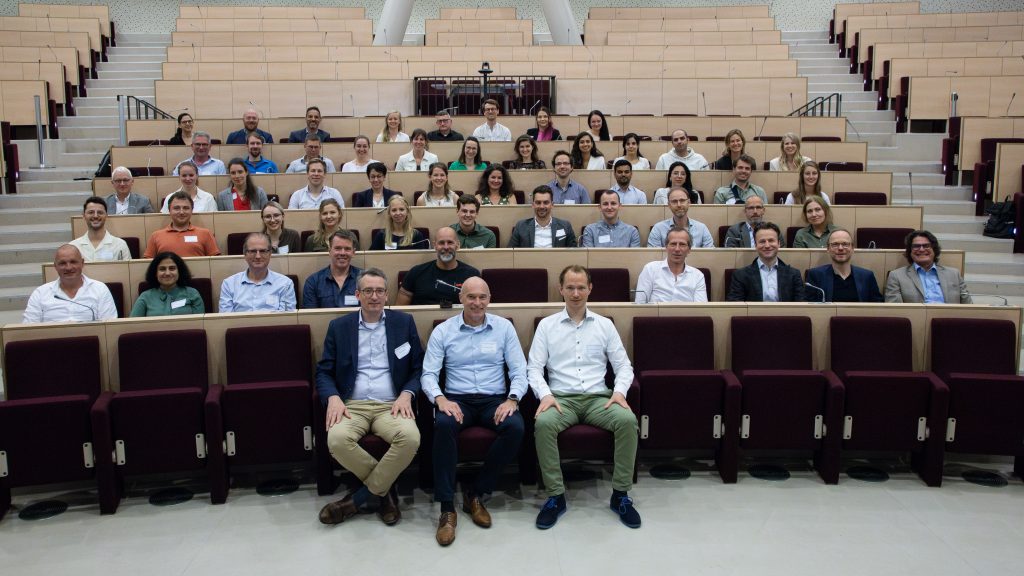
Exciting insights from the 2nd IMAGIO consortium meeting this year at Leiden University Medical Centre, in Leiden, the Netherlands!
The IMAGIO project aims to amass the clinical evidence for the wider adoption of interventional oncology in three cancer types, to achieve faster recovery, shorter hospitalisations, and lower healthcare costs. Researchers, Clinicians, Patient Groups, and other stakeholders came together for a two-day interactive plenary to discuss progress and set clear objectives for the upcoming year. The primary focus of the meeting was to report on the progress made over the past year, set clear objectives for the upcoming year, and prioritise the next six months’ activities to meet project targets.
Dr. Mark Brugmans from the Leiden University Medical Centre opened the session. Dr. Brugmans reflected on project achievements since the last meeting. Then, Robert Hofsink, Manager of Public-Private Partnerships & Open Innovation at Philips and Work Package (WP) 1 leader emphasised the critical need to strengthen connections within the consortium partners and work package leaders. He also highlighted the main next steps in the project. Furthermore, he provided updates on the progress of WP1, which included gathering and documenting clinical and technical requirements and creating a data management plan.
WP2 deals with multimodal interventional imaging for fast and precise radioembolization and focuses on improving minimally invasive therapy technology and gathering clinical evidence of its impact. In WP2, led by Dr. Hugo de Jong from the University Medical Centre Utrecht use a compact and light hybrid detector combining X- and gamma rays is developed to improve the tumour targeting precision while cutting the length of the intervention in half. Testing the effectiveness of the planning software was identified as an immediate priority for the next months.
WP 3, led by Leiden UMC, focuses on thermal ablation therapy for liver cancer. A clinical study is under preparation, with the medical ethical approval process ongoing at the project partners. Efforts are being made to enrol additional clinical centres. Technical developments on AI-based tools for liver segmentation and tumour margin assessment were also presented and their status discussed.
WP 4 targets early-stage lung cancer detection and minimally-invasive therapy, in a comprehensive approach for the entire care pathway. Dr. Roel Verhoeven, leading this WP from Radboud University Medicla Centre, has highlighted the main achievements, consisting of an AI-based approach to determine the optimum care pathway considering individual patient preferences. Other innovations currently being explored are a new method for instant pathology analysis, allowing definitive diagnostics and intervention within the same session, and minimally invasive interventions using flexible bronchoscopes under cone beam CT guidance. The preparation of these clinical studies is underway.
WP 5 works on sarcoma therapy, which is a very aggressive cancer type, for which there is currently no other treatment modality than surgical resection. As it primarily affects young patients, a minimally invasive treatment modality would have an enormous impact on not only survival rates but also the quality of life, by avoiding amputations Dr. Holger Grüll, leading this work package from the University Hospital of Cologne, presented the set-up of the preclinical evaluation on large animals, and the status of the clinical trial using temperature-sensitive lipid vesicles (liposomes) that, heated by high-intensity focused ultrasound under MR guidance, can release chemotherapy agents locally in the tumour.
Dr Oussama Karroum, the IHI Project Officer from IHI, had a short intervention explaining the progress reporting process and provided recommendations, emphasising the importance of regularly tracking progress. A significant highlight of the day was introducing a new consortium member, Cancer Patients Europe (CPE), as the leader of WP 7 on communication, dissemination, and exploitation. Representing Cancer Patients Europe, Kaustubh Dhurandhar, Communications Officer, underscored the work package goal of involving patients in the project and reaching policymakers and stakeholders. Leading Work Package 7, CPE outlined their plan to resume and continue communication activities, manage the website, social media, and newsletters, and strengthen IMAGIO’s visual identity and digital presence. An event with policymakers is also planned.
Following this session, the participants joined dedicated breakout sessions to agree on the plans and actions for upcoming stages of the project.
Dr. Yana Kampfer from the Cologne University Hospital, leading the WP6 on Health Economic Evaluation, joined the breakout sessions on WP2 and WP3 to get deeper insights into the interventional oncology pathways for liver cancer. A dedicated WP6 session took place on Day-2.
Close to the day’s end, participants embarked on a tour of the Leiden University Medical Centre and had the opportunity to visit the Leiden Image-Guided Therapy (LIGT) Centre. This visit showcased cutting-edge facilities and innovations in image-guided therapy, providing insights into technological advancements. The day concluded with a delightful networking dinner at the Botanical Garden of Leiden, fostering collaboration and strengthening connections among attendees.
Day 2
The second day focused on reporting the outcomes of the previous day’s breakout sessions and presenting clear plans for the next stages. WP 2 will focus on software finalisation, clinical studies, and cost-effectiveness. Next, WP 3 representatives from LUMC and University of Maastricht reiterated deadlines for predictive tools for patient selection, treatment planning, and evaluation, aiming to improve inclusion rates and data collection from more centres. WP 4 set priorities towards the optimisation of patient preference surveys and planning on training AI models. Discussions on WP 5 evolved around planning to submit the clinical trials, and advanced technical developments on the use of a new high-intensity focused ultrasound system developed by Profound. WP6, presented by Dr. Yana Kampfer from the Cologne University Hospital, introduced the status of the health economic evaluation, including a costing analysis for liver cancer and sarcoma. The next step is to identify stakeholders and conduct a survey aiming to map the factors influencing the technology adoption by the clinical practice. WP7 will focus on the active promotion of project results and increasing awareness of the cancer types addressed by the project. The meeting concluded with an overview of the progress reporting for the first project year. Overall, the two-day consortium meeting in Leiden was a success, with productive discussions, clear objectives set, and a reinforced commitment to achieving the project’s ambitious goals.